
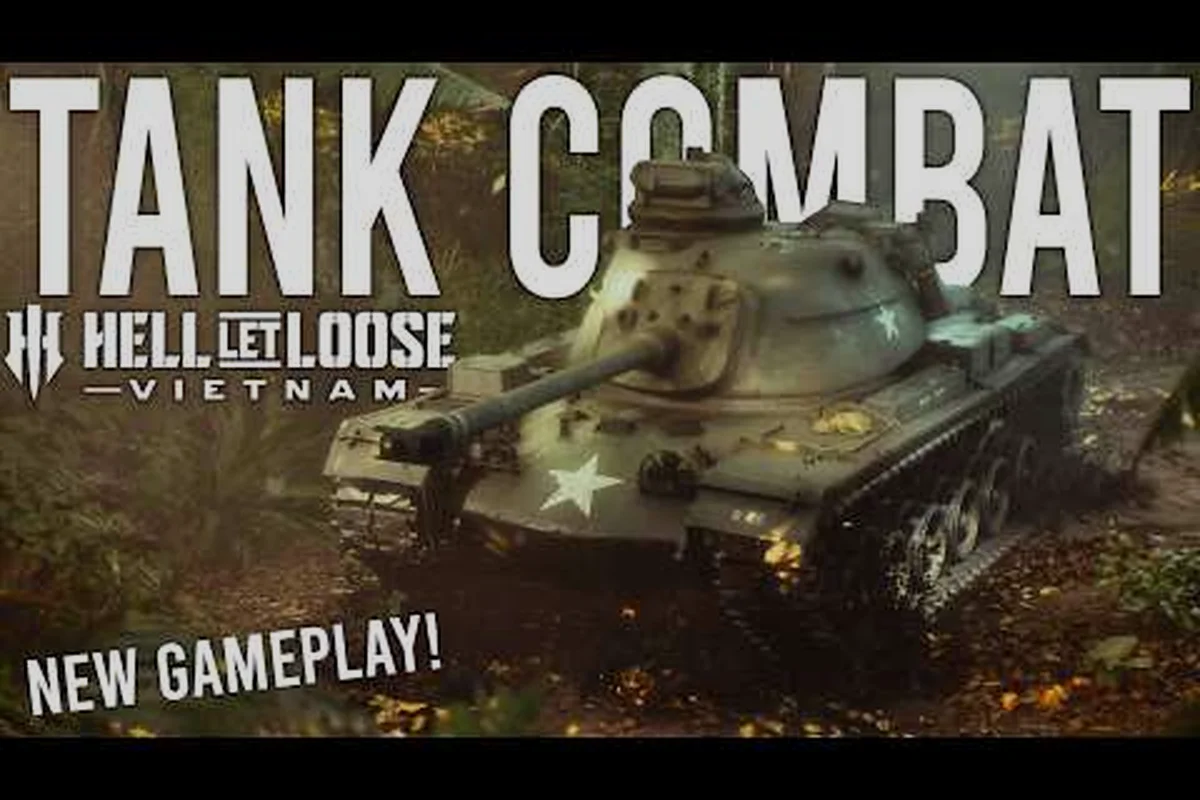
Hell Let Loose: Vietnam introduces a dramatically expanded vehicle roster that reshapes how squads approach the 50v50 battlefield. Tanks, helicopters, and heavily armed patrol boats each demand specialized crew coordination, and understanding their strengths and weaknesses is the difference between steamrolling a sector and losing your entire armor squad in thirty seconds. This hell let loose vietnam vehicle guide breaks down every confirmed vehicle, its intended role, and the crew positions you need to fill to operate it effectively.
The vehicle layer in Hell Let Loose: Vietnam is not a side attraction; it is the backbone of offensive pushes, defensive holds, and supply logistics. According to the official game page, the US faction fields helicopters for fire support and supply drops, while both sides deploy patrol boats on river networks and Armour squads crew tanks with a Tank Commander and Crewman working as a coordinated team. Because vehicle spawns are limited and map control depends on keeping your armor alive, knowing which vehicle to call in and when is a core strategic skill.
Hell Let Loose Vietnam Vehicle List and Crew Requirements
The confirmed vehicle roster spans three distinct categories, each with its own spawn rules, crew requirements, and tactical purpose. The Steam listing confirms that the game features heavily armed patrol boats, US-only helicopters, and tanks crewed by dedicated Armour squads. Community reports from the open beta suggest that vehicle spawns are tied to the same resource system as classic Hell Let Loose, meaning commanders must allocate fuel and munitions carefully to keep the fleet operational.
| Vehicle Category | Faction Access | Crew Positions | Primary Role |
|---|---|---|---|
| Tanks (M48 Patton / T-54) | US and NVA | Tank Commander, Crewman (Driver, Gunner) | Armored breakthrough, anti-tank defense, infantry support |
| Helicopters (UH-1 Huey) | US only | Pilot, Logistics Officer | Troop transport, supply drops, fire support |
| Patrol Boats (PBR / armed skiffs) | Both factions | Driver, Gunner | River control, flanking insertions, fire support along waterways |
Each vehicle type demands a different crew mindset. Tanks operate on a three-man coordination model where the Tank Commander spots targets while the gunner tracks and engages, and the driver positions the hull to present the thickest armor. Helicopters require the Pilot to manage altitude and approach angles while the Logistics Officer coordinates drops with squad leaders on the ground. Patrol boats are the most forgiving entry point because they only need two crew members, but they are also the most exposed to ambushes from riverbanks.
The crew requirement for each vehicle is a hard constraint, not a suggestion. A tank with only a driver and gunner but no commander is severely handicapped because the gunner has a narrow field of view and cannot spot infantry approaching from the flanks. Similarly, a helicopter without a Logistics Officer cannot drop supplies, which removes its primary strategic value. When you are building your squad composition, check the role breakdown guide to see which classes unlock vehicle crew positions and how to distribute them across your unit.
Tank Operations and Armor Mechanics
Tanks in Hell Let Loose: Vietnam follow the established Hell Let Loose formula but with Vietnam-era adjustments. The M48 Patton for the US and the T-54 for the NVA are the confirmed main battle tanks, and both require a Tank Commander plus two Crewmen to operate at full effectiveness. The Tank Commander sits in the cupola with a 360-degree view, the gunner controls the main cannon and coaxial machine gun, and the driver handles movement and hull positioning.
| Tank Attribute | M48 Patton (US) | T-54 (NVA) |
|---|---|---|
| Main Armament | 90mm rifled gun | 100mm rifled gun |
| Armor Profile | Thicker frontal turret, weaker sides | Sloped hull, better shot deflection |
| Mobility | Slower acceleration, higher top speed | Faster acceleration, lower top speed |
| Crew Count | 3 (Commander, Gunner, Driver) | 3 (Commander, Gunner, Driver) |
The armor damage model rewards angling and hull-down positioning. When you present your frontal armor at an angle, incoming rounds are more likely to ricochet, which is why experienced tank crews never sit perpendicular to an enemy gun. Community testing from the open beta suggests that the T-54's sloped hull gives it an edge in long-range engagements, while the M48's thicker turret armor makes it more resilient in close-quarters brawls.
Tank positioning is everything in Vietnam because the maps feature dense jungle and narrow road networks. A tank that pushes too far ahead of infantry support will get swarmed by NVA sappers carrying satchel charges, while a tank that hangs too far back cannot provide effective fire support for the assault. The sweet spot is roughly 50 to 100 meters behind the forward infantry line, close enough to engage enemy strongpoints but far enough to avoid close-range ambushes.
For a deeper dive into armor positioning, angling, and anti-tank defense, the tank tactics guide covers advanced maneuvers like hull-down positioning and reverse-slope defense. That guide also breaks down how to coordinate with infantry squads to clear ambush zones before your armor advances.
Tank Commander Responsibilities
The Tank Commander is the most demanding crew position because they serve as the eyes and ears of the vehicle. While the gunner is limited to the narrow optics of the main sight, the commander has a full 360-degree view from the cupola and can spot targets, call out bearings, and prioritize threats. The commander also manages the vehicle's radio communication with the squad leader and commander, relaying enemy armor positions and infantry movements.
Effective commanders use a simple callout system: direction, distance, target type, and action. For example, "Enemy T-54, 200 meters, northeast, behind the treeline" gives the gunner enough information to rotate the turret and acquire the target. The commander also decides when to engage and when to hold fire, because firing the main gun reveals your position to every enemy on the map.
Gunner and Driver Coordination
The gunner and driver form a mechanical partnership that determines whether the tank survives contact. The gunner tracks targets through the main sight and calls out when they need the hull rotated to bring the gun to bear, while the driver adjusts position based on those calls. This coordination is especially critical in jungle terrain where sightlines are short and targets appear suddenly.
Drivers must also master terrain reading. Soft ground slows the tank dramatically, and steep slopes can expose the vulnerable underside armor. The best drivers maintain a mental map of safe routes, avoiding obvious chokepoints where enemy anti-tank teams are likely to set up. When you are moving through dense vegetation, the driver should follow the gunner's lead and keep the frontal armor pointed toward the most likely threat direction.
Helicopter Operations and US Air Superiority
Huey Crew Roles and 50v50 Fire-Support Rotation
The Helicopter unit's Pilot and Logistics Officer roles are US-exclusive, creating a faction asymmetry that dictates tempo. A Logistics Officer can drop supplies to establish forward garrisons, while the Pilot provides fire support—but both share the same Huey airframe, forcing a rotation. In a 50v50 Warfare match, a single squad can alternate: supply drop to secure a defensive sector, then rocket strafes to break an NVA assault on the next capture point. This dual-role cycling maximizes the Huey's uptime without exposing it to prolonged AA fire.
Helicopters are the defining vehicle asymmetry in Hell Let Loose: Vietnam, and they are exclusive to the US faction. The UH-1 Huey serves three primary functions: troop transport, supply drops, and fire support. The official game page confirms that helicopters provide fire support and supply drops, making them a strategic asset that can turn the tide of an offensive if used correctly.
| Helicopter Function | Crew Requirement | Tactical Use |
|---|---|---|
| Troop Transport | Pilot + Logistics Officer | Rapid insertion of infantry squads behind enemy lines |
| Supply Drops | Pilot + Logistics Officer | Deliver supplies for garrisons, outposts, and defensive structures |
| Fire Support | Pilot + Door Gunners | Suppress enemy positions during assaults and defend landing zones |
The Pilot role is the most technically demanding position in the game because helicopter flight in Hell Let Loose is unforgiving. The Huey has a heavy rotor system that responds slowly to input, and new pilots often overcorrect and lose control during landing approaches. Community reports from the open beta suggest that practicing hover stability and slow descent rates is essential before attempting combat insertions.
The Logistics Officer manages the cargo bay and coordinates with ground squad leaders. Before takeoff, they confirm which squads need transport and where supplies should be dropped. During the flight, they relay enemy anti-air positions to the pilot and adjust the drop plan based on ground conditions. A good Logistics Officer keeps the pilot focused on flying while they handle all communication with the ground.
Helicopter landings are the most vulnerable moment in any flight. A Huey descending into a hot landing zone is an easy target for small arms fire, and a single well-placed burst can disable the rotor or kill the pilot. The safe approach pattern is to circle the landing zone at altitude, identify enemy positions, then descend rapidly in a controlled spiral to minimize exposure. The pilot should always have an escape route planned in case the landing zone turns hot.
Because helicopters are US-only, the NVA must counter them with anti-air fire and tunnel networks. NVA players can use heavy machine guns and small arms to harass low-flying helicopters, and the tunnel system allows them to reposition quickly to ambush landing zones. This creates a constant cat-and-mouse dynamic where US pilots must vary their approach patterns and never land in the same spot twice.
Patrol Boats and Riverine Warfare
Patrol boats are the shared vehicle category in Hell Let Loose: Vietnam, available to both factions for controlling the extensive river networks that crisscross the six launch maps. The official game page confirms that both sides use heavily armed patrol boats, and community testing suggests they are essential for flanking maneuvers and rapid troop movement along waterways.
| Patrol Boat Feature | US PBR | NVA Armed Skiff |
|---|---|---|
| Primary Armament | .50 cal machine gun | 12.7mm heavy machine gun |
| Crew Positions | Driver, Gunner | Driver, Gunner |
| Passenger Capacity | 4-6 infantry | 4-6 infantry |
| Speed Profile | Faster, less maneuverable | Slower, more maneuverable |
The riverine combat model rewards patience and map knowledge. Boats are extremely vulnerable to ambushes from the riverbank, so crews must scout ahead before committing to a full-speed transit. The gunner should watch both banks for movement, while the driver maintains a zigzag course to make the boat a harder target for RPGs and recoilless rifles.
Patrol boats excel at flanking insertions because rivers often run behind enemy defensive lines. A well-timed boat drop can place an entire infantry squad behind the enemy's main defensive position, forcing them to split their attention between the frontal assault and the rear threat. This is especially effective on maps like Thanh Hoa Bridge, where the river provides a natural avenue of approach that defenders often neglect.
The boat gunner position is also a powerful fire support tool. The heavy machine gun can suppress enemy infantry positions, destroy light vehicles, and even damage tanks from the rear where their armor is thinnest. However, the gunner is fully exposed and becomes a priority target for enemy snipers, so they must stay mobile and use cover whenever possible.
Vehicle Controls, Repair, and Maintenance
Patrol Boat Loadouts for Riverine Sector Control
Both factions field heavily armed patrol boats, but their utility shifts by mode. In Offensive, the attacking US team uses boats to flank the NVA's defensive river sectors, landing infantry behind tunnel networks. Defending NVA crews should anchor boats near bridge choke points, using their heavy armament to deny crossing zones. On maps like Thanh Hoa Bridge, a single boat can suppress an entire approach lane, forcing the enemy into open ground where Mortar units and recon can engage. Boat positioning is a force-multiplier that dictates riverine map control.
Understanding the vehicle controls in Hell Let Loose: Vietnam is essential because each vehicle type has a unique control scheme. Tanks use the standard WASD movement with mouse aiming for the turret, helicopters require collective and cyclic management with additional keys for throttle and trim, and patrol boats use simplified throttle and steering controls. The Steam community hub has active discussions about control bindings, and many players recommend customizing the default layout before your first match.
| Vehicle Type | Movement Controls | Unique Mechanics |
|---|---|---|
| Tanks | WASD + mouse turret aim | Hull alignment, turret traverse speed, coaxial MG |
| Helicopters | WASD + mouse cyclic, Q/E collective | Hover stability, autorotation, rotor damage |
| Patrol Boats | WASD + mouse steering | Throttle control, reverse, anchor |
The repair mechanic is shared across all vehicle types and requires a Crewman or Engineer role to perform. When a vehicle takes damage, the crew can exit and repair the hull, tracks, or engine, but this leaves the vehicle completely vulnerable. Community reports suggest that the repair speed is slow enough that you should only attempt it in a secure position with infantry cover.
Vehicle damage states are communicated through the HUD with color-coded indicators. Green means the component is functional, yellow indicates damage that degrades performance, and red means the component is critical or destroyed. A tank with a red engine cannot move, a helicopter with a red rotor cannot maintain altitude, and a boat with a red rudder can only travel in a straight line. Prioritize repairs based on which component is most critical to your current situation.
The spawn economy for vehicles is tied to the resource system, and commanders must allocate fuel and munitions to keep the fleet operational. According to community data, tanks are the most expensive vehicle to spawn, followed by helicopters and then patrol boats. This means you should never waste a vehicle spawn on a reckless push, because the cooldown and resource cost will leave your team without armor support when you need it most. The vehicle spawn guide breaks down spawn cooldowns, repair mechanics, and damage states in full.
Vehicle Selection Strategy by Map and Game Mode
Choosing the right vehicle for the right map and game mode is a strategic decision that separates winning teams from losing ones. The map guide breaks down the terrain characteristics of each launch map, but the general principles apply across all of them. Open maps like Dak To Airfield favor tanks and helicopters, while dense jungle maps like the ones inspired by Operation Starlite favor patrol boats and infantry.
| Map Type | Best Vehicle Choice | Reasoning |
|---|---|---|
| Open Terrain (Airfields, Bridges) | Tanks, Helicopters | Long sightlines favor armor and air mobility |
| Dense Jungle (River Networks) | Patrol Boats | Rivers provide the only fast movement corridors |
| Urban/Compound Maps | Helicopters (US), Tanks (both) | Vertical insertion and armor support for clearing buildings |
In Warfare mode, vehicles are most valuable for breaking through defensive lines and capturing contested sectors. A tank push supported by a helicopter insertion can overwhelm a well-entrenched defense, but only if the commander coordinates the timing. In Offensive mode, vehicles are more valuable for the attacking team, which needs to clear defenders from strongpoints and maintain momentum.
The game mode context also affects vehicle survival. In Warfare, losing a tank to a reckless push is a significant setback because the enemy can use the time to reinforce the sector. In Offensive, the attacking team can afford to be more aggressive with vehicles because they have the initiative and can rotate fresh vehicles in as the front line advances.
For the NVA, the tunnel network provides a counter to US vehicle dominance. Tunnels allow infantry to bypass vehicle kill zones and emerge behind enemy armor, where a well-placed satchel charge can destroy a tank or helicopter. This asymmetry means the US must always protect their vehicles with infantry support, while the NVA can use terrain and tunnels to negate the US vehicle advantage.
According to the official Hell Let Loose Vietnam Steam page, the vehicle roster is built around period-accurate American and North Vietnamese equipment, with mechanics emphasizing armor penetration angles and crew-served weapon positions that directly affect survivability in dense jungle terrain.
Frequently Asked Questions
What is the best vehicle in Hell Let Loose Vietnam?
The best vehicle depends on the map and situation, but the UH-1 Huey provides the most strategic value because it combines troop transport, supply drops, and fire support in one platform. However, it is US-only and requires a skilled pilot. For raw combat power, the M48 Patton and T-54 tanks are the most impactful vehicles on the battlefield.
How many crew members do I need for a tank?
A tank requires three crew members: a Tank Commander, a Gunner, and a Driver. The Tank Commander spots targets and coordinates with infantry, the Gunner operates the main cannon and coaxial machine gun, and the Driver handles movement and hull positioning. Operating a tank with fewer than three crew members severely limits its effectiveness.
Can the NVA use helicopters in Hell Let Loose Vietnam?
No, helicopters are exclusive to the US faction. The NVA counters US helicopter dominance with tunnel networks, heavy machine guns, and small arms fire. NVA players can use patrol boats, which are available to both factions, for riverine operations and flanking insertions.
How do I repair a damaged vehicle?
To repair a vehicle, you need to exit the vehicle and use the repair tool as a Crewman or Engineer. Approach the damaged component and hold the repair button to restore it. Repairs are slow and leave you vulnerable, so always ensure the area is secure before attempting repairs. Prioritize critical components like the engine, tracks, or rotor.
What is the best vehicle for new players?
Patrol boats are the most forgiving vehicle for new players because they only require two crew members and have simpler controls than tanks or helicopters. They also provide a clear tactical purpose: controlling river networks and supporting infantry flanking maneuvers. Start with patrol boats to learn vehicle coordination before moving to tanks or helicopters.